- Verbal conflict between Sirajuddin Haqqani and Mullah Omar
- The height of the crisis, the verbal conflict between Sirajuddin Haqqani and Mullah Omar and its roots.
- The main and major roots of the differences within the Taliban group are as follows.
- 1- The Taliban are caught in the historical tension between the Gholjais and Durranis
- 2- Death of Mullah Omar; The dispute over Amiri's seat and political consequences
- 3- Strong disagreement between the ruling Taliban team in Kabul and the hegemonic team
in Kandahar on solving the
challenges in the governance process - 4- Lack of trust and obedience between the ruling team and the domineering emir
- 5- Dispute over women's education and work.
- 6 - Division and dream on Nizami,
- 7 - The superiority of the southern Pashtuns over other Pashtuns and other ethnic groups.
- 8 - Conclusion
Taliban leaders are having serious differences within the group
Taliban leaders are having serious
differences within the group
Verbal conflict between Sirajuddin Haqqani and Mullah Omar
Despite the catastrophic economic problems and the humanitarian crisis in the country, and
when the Taliban officials call the Taliban's approach intolerable.
The leaders of the Taliban have criticized each other harshly and harshly in various situations,
and many commentators consider such criticisms to be evidence of differences between the Taliban
in the high ranks of the leadership.
Also, the successive and effective fatwas of the Taliban leader, which are written and communicated
from Kandahar with the support of a part of the Sharia-oriented currents within the Taliban
system, have created many obstacles against the functioning of the administrative structures
in order to provide the necessary services and access to the Afghan society. Therefore, the
rulers in Kabul are not only under the pressure of the international community and various
organizations for recognition, but despite more than two years of occupying the entire territory
of Afghanistan, they could not take a positive step to solve the country's problems. At the
same time, the external pressure relying on the internal crises, on the other hand, is affected
by the political and executive inefficiency of the Taliban government, and has taken the lead
from the central government of the Taliban in Kabul. Expectations from the traditional leaders
of the Taliban, who have gained political power by making many promises, have also increased
and put pressure on the executive staff of the current ruling system.
In the context of this serious confrontation, another conflict between two Sharia-oriented
ideas, which deeply believes in the implementation of religious rituals and rulings according
to Hanafi jurisprudence and Matridi beliefs, has also caused the majority of the Pashtun community
of Afghanistan to be under pressure.
In other words, two currents of thought in the framework of the Taliban's unified rule turned
to openly align against each other. In Kandahar, the center of jurisprudence and leadership
of the Islamic Emirate, a current that has a deep belief in the principles of Sharia and the
beliefs of the historical thought of the Pashtun-speaking people, has faced a deep crisis in
Kabul, the political and administrative capital of the Taliban.
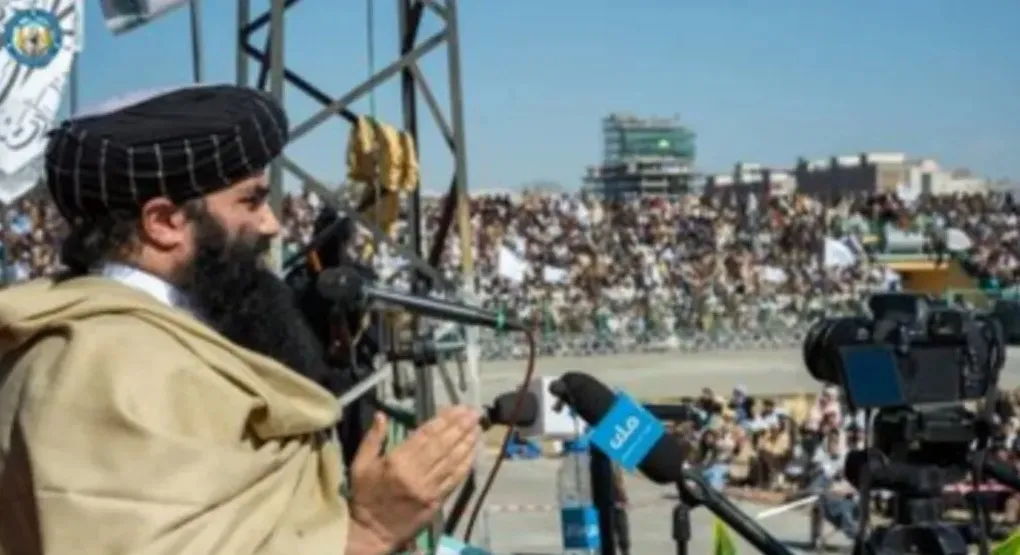
For example, some time ago, Sirajuddin Haqqani criticized the leadership of the Taliban, and
a videotape of a high-ranking official of the Taliban has been published, criticizing the leadership
of the Taliban with very strong words.
On the other hand, Hebatullah Akhundzadeh, the leader of the Taliban, severely criticized the
leaders of the group and members of their government and said that this government is not in
the interest of Muslims, but in the interest of a few people, and there is still a deal between
the senior members of this group. continues.
A number of officials of the former government of Afghanistan and political analysts believe
that the recent statements of Sirajuddin Haqqani, the Acting Minister of the Interior of the
Taliban, and Sher Mohammad Abbas Stangzai, the Political Deputy of the Ministry of Foreign
Affairs of this group, reflect the serious differences within the Taliban group over more power
and influence.
The Acting Minister of Interior of the Taliban, on February 11 (22 December), in a gathering
in Khost province, accused the officials of the current administration of the Taliban of "monopoly
of power" and emphasized that the current situation is "unbearable". He said that they should
People's wounds should be healed, not that it becomes a dictatorship and people are persecuted.
He added: "May God correct our actions and intentions. This state of affairs is not tolerable."
Continuing his speech, he said: "Today, we consider ourselves so entitled that challenging,
monopolizing and discrediting the entire system has become a basis in our thinking and temperament."
The continuation of Haqqani's statements shows the impact of public pressures, criticisms and
dissatisfaction with the approaches of people of this group in the administration of the country;
The sentences in which a Taliban official talks about "reform": "Yesterday my responsibility
was one thing, but today it is something else. The responsibility I have today is to bring
myself closer to the nation. And as a ruler, our duty is to bring the people closer to us,
to reassure them, and to take prudent and corrective steps to remove the defects. Our responsibility
is to heal people's wounds."
Before Haqqani, Shir Mohammad Abbas Stanekzai, the deputy minister of foreign affairs of the
self-proclaimed government of this group, spoke strongly about "the voice of society" and "reforms".
He had said that if the orders of the Taliban leaders are not in accordance with Sharia, it
is not obligatory to obey them. Stanekzai emphasized that Taliban leaders are not "prophets
and companions" at whatever level they are, they are religious scholars in the 21st century
and are not free from mistakes. This Taliban official pointed to the disagreements among the
Taliban leaders and said that if someone does not give proper advice to the leadership or the
leadership at any level makes a wrong decision, "all the people of that community should raise
their voice and the leaders should listen to them and bring reforms in themselves." He continued
in this speech that "everybody's advice should be listened to so that reforms can be made and
it should not be taken as if someone wants to destroy someone else and if we think like that,
this society will not get along."
On the other side of the issue, the transfer of the capital from Kabul to Kandahar and the
presence of the Taliban leadership in this city, which has a strategic position for Durranis,
comes back. These cases are a sign of their efforts to establish their position at the top
of the power pyramid in opposition to the powerful Haqqanis in terms of military and external
communications.
Following this series of public criticisms in the scattered speeches of the Taliban, the former
representative of the US in Afghanistan, Zalmi Khalilzad, has confirmed these differences and
said that: "However, the question that has been examined in this analysis is whether The differences
between the Taliban are serious and can have fateful consequences on the future of the Afghan
government.
Peter Bergen, vice president of global studies at the New America Research Center, based in
Washington, DC, told Voice of America that Haqqani's recent statements make it clear that he
claims to be the leader of all ranks of the Taliban.
Mr. Bergen added: "He presents himself as the overall leader of the Taliban. Since the Haqqanis
have always been a strong military component of the Taliban, and Siraj controls the interior
ministry as well as the intelligence services, he is in a strong position to challenge the
leadership." The Taliban is located in Kandahari.
Bergen, who is also the author of seven books on terrorism and extremism and has traveled to
Afghanistan more than 15 times since 1997, also believes that there has always been a difference
between the Haqqani and other branches of the Taliban. "The Haqqanis have also always been
somewhat distinct from the main group of the Taliban because their power base is in eastern
and central Afghanistan, not southern Afghanistan," he said.
A number of analysts believe that in various cases, especially in the field of women's rights
and civil liberties, there is a major difference between Kandahari and non-Kandahari Taliban
leaders.
 Azimullah Varsji, a political analyst based in America, considers the creation of an
all-inclusive government and finally preventing the "repetition of the first round
scenario of the Taliban" to be another point of contention within the Taliban group.
Azimullah Varsji, a political analyst based in America, considers the creation of an
all-inclusive government and finally preventing the "repetition of the first round
scenario of the Taliban" to be another point of contention within the Taliban group.
Versji told Voice of America: "The Haqqani Group, the Qatar Group and Mullah Yaqub [the head
of the Taliban's Ministry of Defense], who were in contact with the world, especially Qatar,
America and the rest of the world, are in favor of softening and changes and expanding relations
with the world. But Hebatullah and his associates Inside Afghanistan and Pakistan, they are
in favor of continuing strict policies and realizing tribal politics under the name of Islam.
He said that Mullah Hebatullah's office is in the grip of matters such as collecting revenue,
allocating office expenses, and making major religious and governmental decisions, among other
factors of the dispute between Haqqani and the Taliban leader.
Noor Rahmani Akhli, the Minister of Refugees and Returnees in the previous government of Afghanistan,
agrees with Bergen. He told the Voice of America: "The Haqqani network has played a separate
role from the Taliban in Kandahar for the past 20 years and has functioned independently from
the Taliban in Kandahar."
According to Akhli, although the Haqqanis are not considered to be the founders of the Taliban
movement by the "Kandahari Taliban", this network "considers itself more deserving of leadership
than other factions of the Taliban due to its colorful presence in the terrorist operations
of the past 20 years."
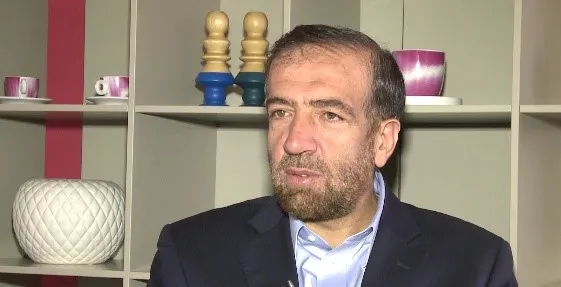 Referring to Haqqani's recent statements, this former
official of the Afghan government said: "I see the reason for these differences in the
conflicting interests of the Kandahar faction, that is, the Quetta Council, and the
Haqqani network. The step has been pushed aside by the Kandahar faction, and it is clear
that the Haqqanis will no longer tolerate the monopoly of resources and power from the
address of the Taliban in Kandahari, and in the coming days, we may see this gap widen,
and we may also see the Haqqani network gaining points.
Referring to Haqqani's recent statements, this former
official of the Afghan government said: "I see the reason for these differences in the
conflicting interests of the Kandahar faction, that is, the Quetta Council, and the
Haqqani network. The step has been pushed aside by the Kandahar faction, and it is clear
that the Haqqanis will no longer tolerate the monopoly of resources and power from the
address of the Taliban in Kandahari, and in the coming days, we may see this gap widen,
and we may also see the Haqqani network gaining points.
Fazl Ahmad Manavi, the Minister of Justice of the previous government and a member of the leadership
of the Afghan National Resistance Front led by Ahmad Massoud, wrote in a tweet in response
to Haqqani's recent statements that "the leader of the Taliban group issues his orders in a
limited circle of extremist mullahs. "The difference between the Haqqani network, which is
close to Pakistan, and the Kandahar region, which is closer to America and India, is deepening
with each passing day. With the fragile situation of Pakistan, the Kandahar region has become
stronger, but Pakistan's role will be decisive."
Seyyed Javad Sajjadi, a professor of international relations, also believes that the
Taliban is deeply divided, because according to him, the Taliban government is exclusive,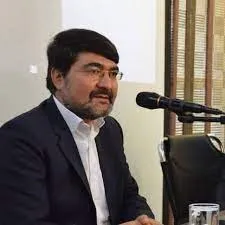 ideological, single-gender, single-ethnic, single-religious, single-language, and single-group,
which is in no way compatible with The diverse and multiple reality of Afghanistan does not
match and does not represent the people of Afghanistan.
ideological, single-gender, single-ethnic, single-religious, single-language, and single-group,
which is in no way compatible with The diverse and multiple reality of Afghanistan does not
match and does not represent the people of Afghanistan.
According to Sajjadi, the performance of the Taliban in general has ignored the demands and
fundamental rights of other members of the society that even some of its leaders are against
the situation imposed by the conservative Taliban.
Sajjadi believes that the Taliban group has severe differences in various fields, including
the drafting of the constitution, political freedoms, government structure, interaction with
the opposition, women's rights, and freedom of speech, but not to such an extent that these
differences cause the collapse of their rule in the current situation.
to be
Referring to Haqqani's recent statements, he said: "Taliban pragmatists are trying to show
the necessary flexibility, ask people for help and communicate with the opposition in a
controlled manner, improve interaction with the international community, and meet the
demands of the society." The world should be fulfilled, while the conservatives still
insist on the continuation of the current policy and situation.
The height of the crisis, the verbal conflict between
Sirajuddin Haqqani and Mullah
Omar and its roots
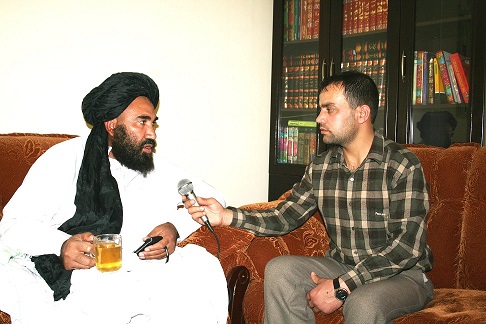
Abdul Salam Zaeef, the former ambassador of this group, during a recent interview,
revealed the sharp differences between Mullah Omar and Sirajuddin Haqqani, the leader of
the Haqqani network and the interior minister of this group, and Noordin Torabi and Maulvi
Mohammadwali Sahib.
I attended a meeting in Kandahar. In this meeting, Mulla Omar, who was
tired of his activities as head of Haqqani. He turned to Sirajuddin and said, Sirajuddin
Haqqani is cruel, I tell you not to be cruel to people. Because of your cruelty, our
houses are on fire.
I tell you, the famously cruel minister of Amberbel, not to be so hard on the people...
I will tell you once again not to act so that people will become disbelievers.....
At the end of his speech, Mulla Umar says that whoever I forgive, I will not forgive three
of you on the day of Mahshar.
Interview with Abdul Salam Zaeef, the former ambassador
of the Taliban group in
Pakistan This section is being completed.
The main and major roots of the differences within the Taliban group are as follows
1- The Taliban are caught in the historical tension between the Gholjais and Durranis
2- Death of Mullah Omar; The dispute over Amiri's seat and political consequences
3- Strong disagreement between the ruling Taliban team in Kabul and the hegemonic team in Kandahar
on solving the challenges in the governance process
4- Lack of trust and obedience between the ruling team and the domineering emir
5- Dispute over women's education and work.
6- Division and dream on Nizami,
7-The superiority of the southern Pashtuns over other Pashtuns and other ethnic groups.
8- Conclusion
1- The Taliban are caught in the historical tension between the Gholjais and Durranis
In the last 300 years, the Gholjais have seized power in Afghanistan only three times.
First in the 18th century, with the authority of Mirwais Khan Hotak in Kandahar, secondly
in 1978 when Nur Mohammad Turki came to power, and the third time when the Taliban and
Mullah Omar came to power.
In the 18th century, Afghanistan was the arena of conquest by the Safavids of Iran and the
Mongols of India. Qalat and Moqar were in the middle of Kandahar and Ghazni, the boundary between
the two states of the Mongols of India and the Safavids of Iran. At that time, the Hotaks of
Gholjai became close to the Safavids and thus, received different titles from them. Mirwais
Khan Hotak, who succeeded his father as the leader of the Hotak tribe, was responsible for
collecting annual ransom and tribute from Pashtun nobles. He finally took advantage of the
involvement of the Safavids with the Ottomans and rebelled against Gargin, the Safavid leader
in Kandahar, and took power. From that time until the capture of Kandahar by Nader Shah Afshar,
the Gholjais ruled over a part of Afghanistan and today's Iran. When Nader Shah Afshar was
killed in 1747 AD, Ahmad Khan Abdali, the commander of Nader's Afghan army, moved to Kandahar
with his army. He carried a lot of money and jewels, including the famous "Mountain of Light"
diamond, on that campaign. Ahmad Khan Abdali was elected king in Kandahar in 1747, and that
event was the beginning of Durrani dynasty in Afghanistan.
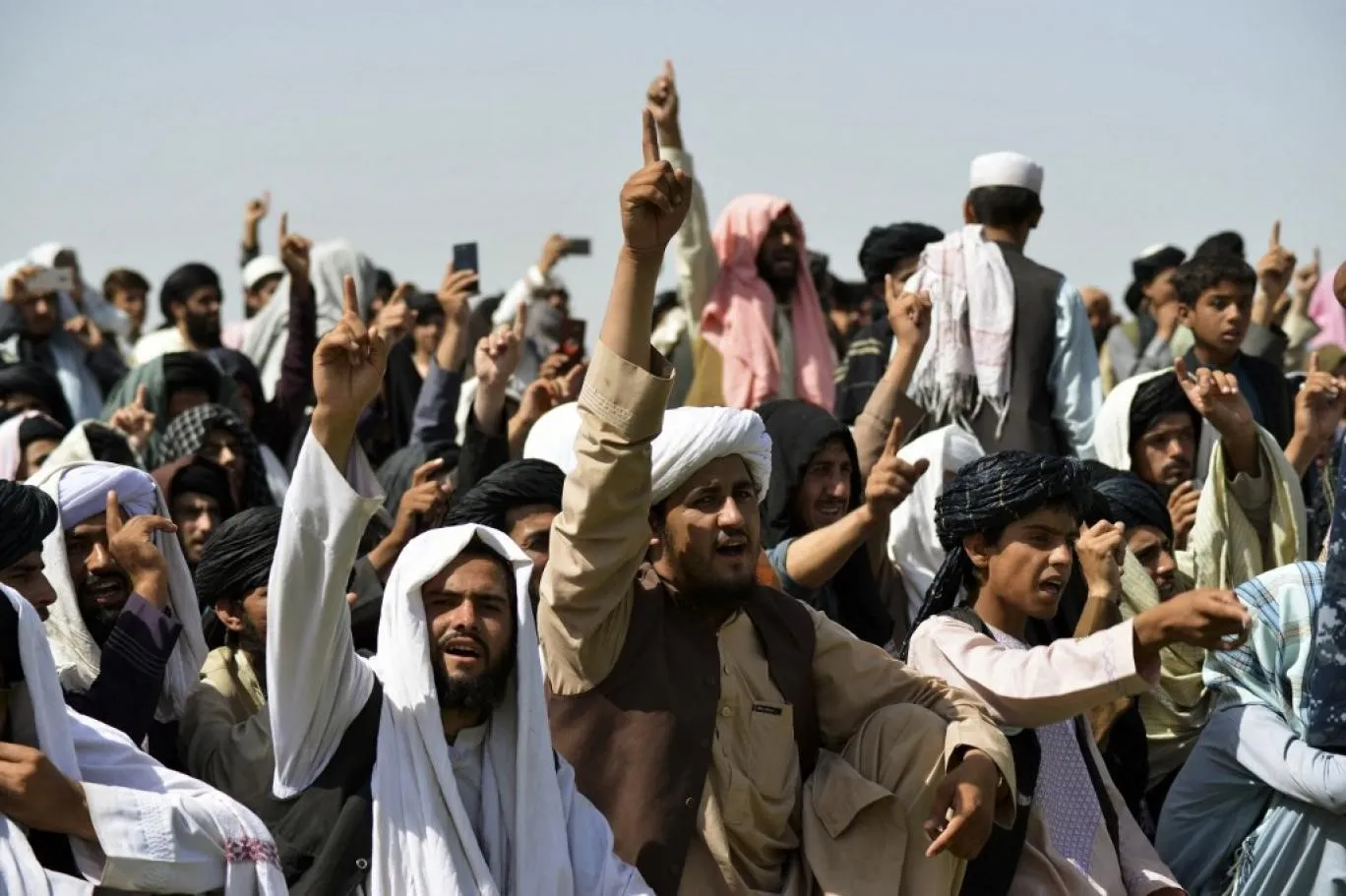
Since the heads of various tribes in Kandahar, including the Gholjais, could not agree on the
choice of a king, they accepted Ahmad Khan, who belonged to the small and disaffected Saduzai
(Abdali) clan, as the king, because they believed that during the reign Ahmad Khan, their absolutism
will still stand. But Ahmad Khan, who had learned the principles of governance under Nader
Shah Afshar, at the first opportunity made all the rebellious khans submit to him by force
or by coaxing and peaceful acceptance. He gave the name "Darani" instead of "Abdali" to his
family, which is still known by the same name. From that time until 1978, the longing for governance
remained in the hearts of Gholjais. In the meantime, the Gholjais attacked the Durranis from
time to time; Among them, during the uprising in 1749, when Nur Mohammad Khan Mir Afghan rose
against Ahmad Shah Durrani, but it was severely suppressed. During the time of Timur Shah Durrani,
Ahmad Shah's son, the most important relatives who are related to the Gholjai tribe rebelled
against him. But Timur Shah also suppressed them. After that, the occasional rebellions of
the Gholjais against the Durranis never ended. Abdul Rahman Khan says in his book "Taraj al-Tawarikh"
written by himself: "Even though I tried, these tribes..., Afridi, Waziri, Masoud and Shinwari
were not reformed, that's why I gave them to England." For this reason, he signed the Durand
Treaty to get rid of some of the Gholjais. Although the fall of Amanullah Khan's government
is linked to Habibullah Kalkani's rebellion, it was actually the successive rebellions in the
eastern and northeastern regions of Afghanistan that weakened the foundations of his government.
These rebellions were then severely suppressed during the reign of Nader Khan and Zahir Shah.
The Mohammadzais in power, who are part of the Abdalis, made them participate in the
Afghan military system in order to appease the Gholjais. This caused the downfall of the
two-hundred-year dynasty of the Muhammadzais in Afghanistan. In 1978, the Gholjai
officers, who were now gathered in the circle of the Democratic People's Party of
Afghanistan, removed the two-hundred-year rule of the Mohammadzais forever, and the
Gholjais came to power once again. With the victory of the Mujahideen in 1992, the
Pashtuns, who considered themselves the traditional heirs of power in Afghanistan,
suddenly faced the Tajiks taking power. For this reason, the wars between 1992 and 1996
are more of a war on the return of power to the Pashtuns than a war of adjustment.
Pakistan, which traditionally wants the rule of Pashtuns in Afghanistan, took advantage of
the existing differences in Afghanistan and by supporting the Taliban movement, which was
still nascent and was formed in a corner of Kandahar, it made the ground possible for the
expansionism of the Taliban. The main structure of the Taliban group consists of Gholjai
tribes, such as Hotak and Ishaqzai, but later Durranis also entered the Taliban fold.
In 1996, once again, the rule of the Gholjais was established over most of Afghanistan. Most
of the power during the "Islamic Emirate" of the Taliban was in the hands of the Gholjais,
and the fall of the Taliban brought their fall as well. Hamid Karzai, who was from Popalzai
tribe and Durrani tribe, was an unknown name until then, but at the Bonn meeting in 2001, he
suddenly became the head of power in Afghanistan. Gholjais were again disappointed with government.
By installing a Pashtun, America wanted to send a clear message to other Pashtuns to leave
the conflict and enter the government. But the Gholajais ignored that message. Although some
of them joined the government, they were not the real representatives of different Gholjai
tribes. For this reason, the only reason for the rapid revival and re-structure of the Taliban
was not simply to fight foreigners. The main and important factor was the historical conflict
between Durrani and Gholjai tribes.
When the two terms of Hamid Karzai Durrani's rule ended, he tried hard to get another
Durrani to come to power. During his rule, Karzai also tried to use the presence of
foreigners in a creeping and intangible way to strengthen the position of Durranis and
push back the Gholjais. He even tried to clear Kandahar, Zabul, and Helmand of Gholjais.
For this reason, he supported the candidacy of Zalmi Rasool Mohammad Zaei, who was also
his foreign minister. However, Ashraf Ghani Ahmadzai won the election; That is the
election in which widespread fraud was suspected. In order to cover the clear face of
Gholjai-Darani tension, Ashraf Ghani abandoned his ethnic surname and changed from "Ashraf
Ghani Ahmadzai" to "Mohammed Ashraf Ghani". But his attempt for greater authority of
Gholjais did not go away from the Duranis' eyes. Karzai's distance from Ghani was due to
his efforts.
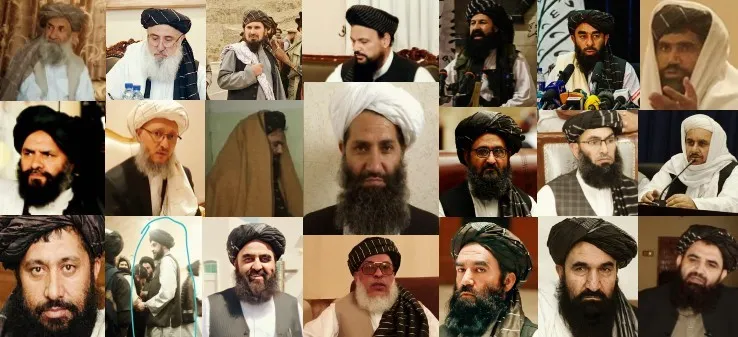
In the last days of his rule, Ghani again paid his respects to the Gholjais and before the
capital fell completely to the Taliban forces, he brought a large number of Haqqani fighters
who are Gholjais into Kabul. Until the Taleban leaders were informed, they seized the majority
of strategic regions and institutions and started negotiations with Karzai, Abdullah, and Hekmatyar,
who are now in charge of the Kabul Order Commission. This movement worried Mollabrader, who
is from Durrani, and because of this, he quickly reached Kabul. But the tensions between them
still remain.
The main reason for the delay in announcing the government of the Taliban in the same Awan
was the opposition of the Haqqani network to the presidency of Mullabrader. Even three nights
before the announcement of the new government, there was a clash between supporters of Mollabrader
and supporters of the Haqqanis in Kabul Citadel. But the fact is that from the very beginning
of the fall of the capital and the quick invasion of Haqqani and his fighters to Kabul and
the capture of strategic areas of the city, it became clear that the tensions between the Mullah
Brothers faction and the Haqqanis have become more obvious. General Hamid Faiz, the head of
Pakistan's intelligence, who has sufficient influence in the Taliban leadership, has also entered
Kabul for this reason. He must reconcile the Taliban branches in any possible way and make
the ground for the official announcement of the government possible. But with all these situations
and the success of the ESA president, the historical tension between Gholjaei and Durrani will
never end.
This tension and dispute is not only the result of power seeking by Mullah brothers or Haqqanis,
but it is rooted in the past three hundred years of Afghanistan's history and goes back to
the historical dispute and conflict between the Gholjais and Durranis. This Taliban power struggle
has made the history of the past three hundred years of Afghanistan to be a history of bloodshed,
war and killing, and small moments of peace are so rare that it is not visible.
2- Death of Mullah Omar; The dispute over Amiri's seat and political consequences
The news of Mullah Omar's suspicious death in 2015, which was said to have happened in a
prison in Karachi, Pakistan, It caused tensions between Taliban groups. Some members of
this group chose Mullah Akhtar Mohammad Mansour as the new leader of the Taliban. This
brought reactions from a number of senior members of the Taliban and Mullah Omar's family.
In the first instance, Tayeb Agha, the head of the political office of the Taliban in
Qatar and a close associate of Mullah Omar, resigned from his position. And a group of
military commanders also announced their opposition to Mullamansour and separated from the
body of this group.
Abdul Manan Niazi, the spokesperson of the opposition group of the new leader, says that a
number of senior Taliban commanders wanted Mullah Akhtar Mansour to step down from the leadership
of this group because his election was made against the internal principles of this group. Melaniaz said: "Mullah Akhtar Mansour was selected by Pakistan's intelligence agency and senior
Taliban commanders did not play a role in this selection. Therefore, each of the senior Taliban
commanders (Mullah Qayyum Zakir, commander of Taliban military operations, Mullah Habibullah,
a member of the Quetta Council, and Tayyab Agha) Assistants of Mullah Muhammad Umar, Muhammad
Razzaq Akhund, Muhammad Abdul Jalil Akhund, Muhammad Zarif Akhund, Muhammad Rasul Akhund, Mullah
Baz Muhammad Akhund and Maulvi Muslim Haqqani...), Mullah Rasul as the new leader of the Taliban
and Mullah Mansour Dadullah and Sher Muhammad Mansour as well. They have chosen the title of
deputy of this group.
Melaniaz said: "Mullah Akhtar Mansour was selected by Pakistan's intelligence agency and senior
Taliban commanders did not play a role in this selection. Therefore, each of the senior Taliban
commanders (Mullah Qayyum Zakir, commander of Taliban military operations, Mullah Habibullah,
a member of the Quetta Council, and Tayyab Agha) Assistants of Mullah Muhammad Umar, Muhammad
Razzaq Akhund, Muhammad Abdul Jalil Akhund, Muhammad Zarif Akhund, Muhammad Rasul Akhund, Mullah
Baz Muhammad Akhund and Maulvi Muslim Haqqani...), Mullah Rasul as the new leader of the Taliban
and Mullah Mansour Dadullah and Sher Muhammad Mansour as well. They have chosen the title of
deputy of this group.
Abdul Manan Niazi, the spokesperson of the opposition group of the new leader, says that a
number of senior Taliban commanders wanted Mullah Akhtar Mansour to step down from the leadership
of this group because his election was made against the internal principles of this group.
Melaniaz said: "Mullah Akhtar Mansour was selected by Pakistan's intelligence agency and senior
Taliban commanders did not play a role in this selection.
Therefore, each of the senior Taliban commanders (Mullah Qayyum Zakir, commander of
Taliban military operations, 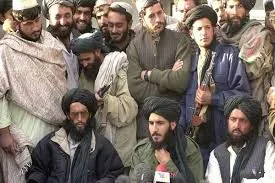 Mullah Habibullah, a member of the Quetta Council, and Tayyab Agha) Assistants of Mullah Muhammad
Umar, Muhammad Razzaq Akhund, Muhammad Abdul Jalil Akhund, Muhammad Zarif Akhund, Muhammad
Rasul Akhund, Mullah Baz Muhammad Akhund and Maulvi Muslim Haqqani...), Mullah Rasul as the
new leader of the Taliban and Mullah Mansour Dadullah and Sher Muhammad Mansour as well. They
have chosen the title of deputy of this group.
Mullah Habibullah, a member of the Quetta Council, and Tayyab Agha) Assistants of Mullah Muhammad
Umar, Muhammad Razzaq Akhund, Muhammad Abdul Jalil Akhund, Muhammad Zarif Akhund, Muhammad
Rasul Akhund, Mullah Baz Muhammad Akhund and Maulvi Muslim Haqqani...), Mullah Rasul as the
new leader of the Taliban and Mullah Mansour Dadullah and Sher Muhammad Mansour as well. They
have chosen the title of deputy of this group.
Although Mullah Sul's choice as Mullah Omar's replacement was not accepted by Pakistan's
intelligence and he operated as a separatist group from the Taliban body until the
Taliban's red cut on Friday, 24 Ardibehesht, destroyed Melanazi by attacking a tourist.
And now, by falsifying the narrative in the leadership of this group, the Taliban are in
conflict with a large number of their opposing commanders. The commanders are like
gunpowder on the fire and you have to wait for it to explode at any moment.
3- Strong disagreement between the ruling Taliban team in Kabul and the hegemonic team in Kandahar on solving the challenges in the governance process
The main challenge facing any current when entering the government is presenting its
desired governance model and trying to implement it. In this context, the Taliban is
facing three basic challenges in its governance model.
First, the way of dealing with the issue of ethnic, linguistic and religious diversity in this
country. This is manifested in the term of international public demand for inclusive governance.
The main question is that the balance point of the Taliban between this demand, the pressure
of non-Pashtuns and the lived experience of the relative participation of other currents in
the government during the previous two decades, on the one hand, and the strong ideas of the
sovereignty of the Pashtuns to rule Afghanistan, the demand of the social body of this group
for On the other hand, where will the revival of these propositions and not having a strong
and influential non-Pashtun movement in its body be?
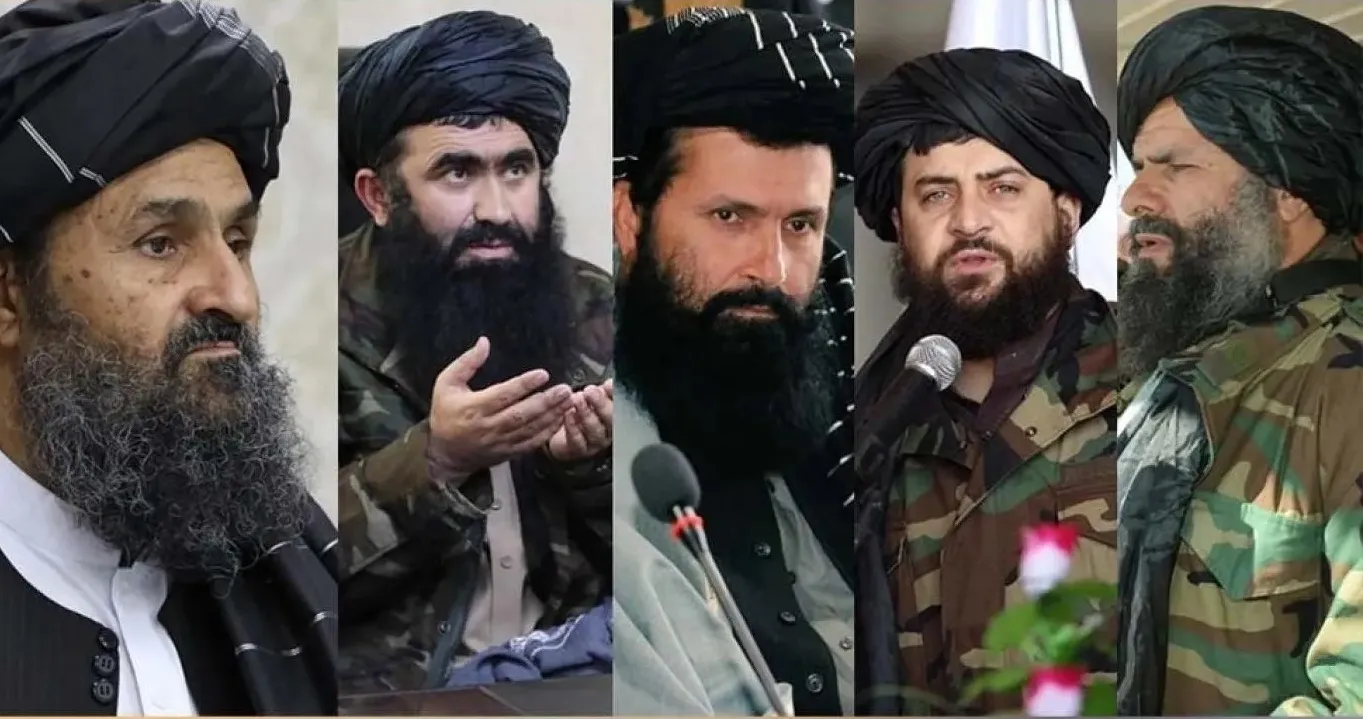 Second, the economic development model. Despite having significant potential areas for development,
Afghanistan's economy has remained economically weak and dependent for several reasons over
the past decades. Now, it should be seen that the Taliban, which is facing a serious challenge
in providing for the daily expenses of its government, is able to overcome the crises of corruption
and dependence, so that it can gradually create the ground for dynamic economic growth and
development based on the two basic advantages of this country, namely transit and mining. provide
or not?
Second, the economic development model. Despite having significant potential areas for development,
Afghanistan's economy has remained economically weak and dependent for several reasons over
the past decades. Now, it should be seen that the Taliban, which is facing a serious challenge
in providing for the daily expenses of its government, is able to overcome the crises of corruption
and dependence, so that it can gradually create the ground for dynamic economic growth and
development based on the two basic advantages of this country, namely transit and mining. provide
or not?
In addition to these two challenges, the three challenges of the model of consolidating power
bases, gaining national and international legitimacy, and repelling rival groups (specifically
the Khorasan branch of ISIS) should be added.
4- Lack of trust and obedience between the ruling team and the domineering emir
Disobedience by the ruling team, the middlemen and the announcement of the decree of
general amnesty by Amir Sultanatelab. It is a clear sign of lack of trust between
different factions of the Taliban group. In the first hours of their stay in Kabul, the
Taliban leaders announced a general amnesty again, which created hopes at different
levels. But from the very first days, many news were published that the atmosphere of
terror and revenge was creating a steady path, which shows the lack of trust and obedience
of the Taliban group forces towards their leader.
Also, prioritizing religious fatwas by the leadership of this group over the realities of
a society in transition,
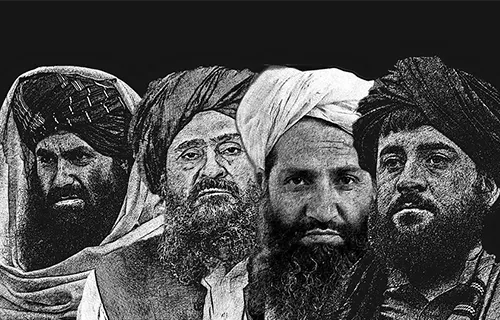 which is in dire need of communication with its surrounding environment for the continuation
of social life. It has caused the differences between the Taliban groups to intensify, and
the unified capacity of the Taliban has decreased day by day, and the expansion of their internal
blocs has increased. At the same time, the past historical rivalries between the political
centrality of Kandahar belonging to the Gholzai and Derrani tribes in Kabul reveal another
manifestation of the hidden historical conflict of different currents and levels of the Taliban,
the visible effects of which can be seen in the society.
which is in dire need of communication with its surrounding environment for the continuation
of social life. It has caused the differences between the Taliban groups to intensify, and
the unified capacity of the Taliban has decreased day by day, and the expansion of their internal
blocs has increased. At the same time, the past historical rivalries between the political
centrality of Kandahar belonging to the Gholzai and Derrani tribes in Kabul reveal another
manifestation of the hidden historical conflict of different currents and levels of the Taliban,
the visible effects of which can be seen in the society.
Finally, another gap can be seen between the Taliban leaders. There is a gap between the
group that has been active outside of Afghanistan and in the political arena (Molabrader
and Amir Khan Motaghi) and the group that has been engaged in armed struggle in the
domestic field. Based on this, the first group will be more political and more tolerant
and interactive, and the second group can be depicted and imagined more violently.
5- Dispute over women's education and work.
The type of encounter with the phenomenon of women's social presence. This issue,
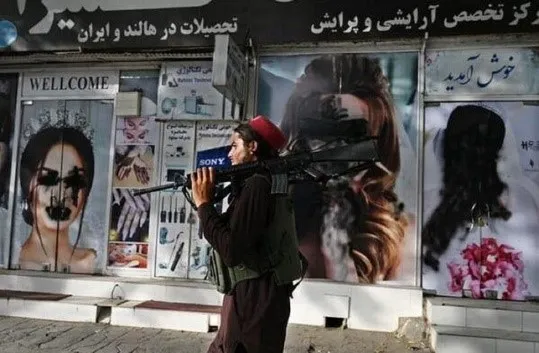 especially in the two fields of education and employment, has become the most important social
challenge of the Taliban at the level of public opinion, and perhaps it can be considered the
most important external manifestation of differences at the level of the Taliban leadership.
especially in the two fields of education and employment, has become the most important social
challenge of the Taliban at the level of public opinion, and perhaps it can be considered the
most important external manifestation of differences at the level of the Taliban leadership.
Sher Mohammad Abbas Stanekzai, the political deputy of the Taliban group, during a meeting
in Logar province, criticized the group's leadership's view on banning women from education
and said that there is no Islamic reason for closing schools to girls, and people want to reopen
these schools. , with the emphasis that "teaching is mandatory for men and women. The important
thing is that education should be opened to women and people without discrimination. In his
recent speeches, he emphasized the principle of freedom of speech in Islam.
This Taliban official pointed to the disagreements among the Taliban leadership and said
that 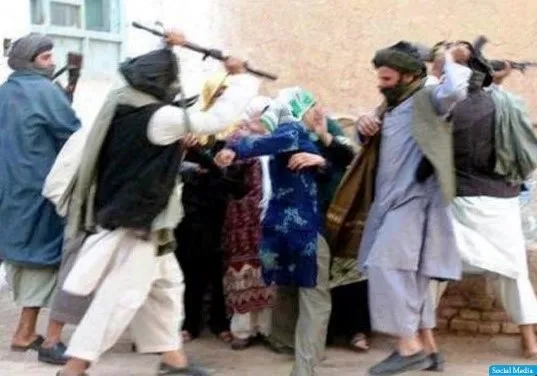
if someone does not give the right advice to the leadership or the leadership at any level
makes a wrong decision, all the people of that society should raise their voice and the leaders
should listen to them and reform themselves. to bring And if the orders of the Taliban leaders
are not in accordance with Sharia, it is not obligatory to obey them.
A number of analysts believe that strict policies on women and girls, single-group rule, indifference
to the demands of the international community, including the fight against extremism, and intra-group
differences are serious challenges that have put Afghanistan in international isolation.
6- Division and dream on Nizami,
The split in the ranks of the Taliban became public in September 2022, shortly after the
Taliban took control of the country, and according to Vida Mehran, a conflict affairs
expert at the University of Exeter, is likely behind some of the recent deadly attacks
attributed to the local branch of the Islamic State (ISIS). ) is also hidden.
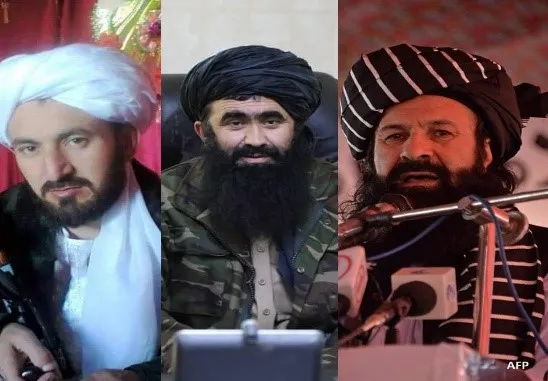 He says, "We knew that the Taliban are not a homogeneous group. Despite this, we are now witnessing
the unfolding of violence between rival factions." ISIS is "excellent" in bloody attacks, which
is a battle for supremacy. For example, in the recent attack on the military hospital in Kabul,
one of Haqqani's allies named Hamdullah Mukhalis, who was the commander of the army corps in
the capital, was killed. Survivors of the attack told AFP that the attackers chanted "Long
live the Taliban" and avoided attacking areas of the hospital where Taliban fighters were being
treated.
He says, "We knew that the Taliban are not a homogeneous group. Despite this, we are now witnessing
the unfolding of violence between rival factions." ISIS is "excellent" in bloody attacks, which
is a battle for supremacy. For example, in the recent attack on the military hospital in Kabul,
one of Haqqani's allies named Hamdullah Mukhalis, who was the commander of the army corps in
the capital, was killed. Survivors of the attack told AFP that the attackers chanted "Long
live the Taliban" and avoided attacking areas of the hospital where Taliban fighters were being
treated.
On the other hand, Sirajuddin Haqqani orders the killing of Dawood Muzamal, the governor
of Balkh. Haqqani issued this order by several suicide bombers who came to Kabul secretly
from Mosul, Iraq. It should be noted that the investigation on this file is ongoing and
various western institutions, including the Iranian Intelligence Organization, are working
on this issue. Daoud Mozmal was close to the leadership circle of the Taliban in Kandahar,
 the drug trafficking network and the Islamic
Republic of Iran. He had also personally signed several lithium contracts worth several
hundred million dollars with the Chinese.
the drug trafficking network and the Islamic
Republic of Iran. He had also personally signed several lithium contracts worth several
hundred million dollars with the Chinese.
At the same time, the establishment of the Afghanistan Islamic Call Coalition, which is a military
organization within the Taliban group and was formed to defend the interests of this group,
and also another military organization under the name of the Abu Obaidah convoy, is another
deviant current of the Taliban and the Haqqani, who are likely to be key players in future
wars. It will be Afghanistan. There are hundreds of other small and big examples like this,
which are beyond the scope of this topic.
7 - The superiority of the southern Pashtuns over other Pashtuns and other ethnic groups.
Of course, the internal fights of the Taliban are not limited to intellectual differences
and are also related to racial and ethnic differences. Last year, reports showed that the
differences and divisions between Pashtuns and non-Pashtuns have progressed to such an
extent that Makhdoom Alam, one of the Uzbek commanders of the Taliban, was arrested on
charges of kidnapping. Qari Salahuddin Ayubi, one of the non-Pashtun commanders who has a
disagreement with the central government, targeted several Pashtun soldiers in "Almar".
 In some other places, the work came to armed conflict and casualties between Taliban groups
and the disarmament and house arrest of some Uzbek commanders by the Pashtuns, and of course
the transfer of troops to a place like Badakhshan to take control of the mines in this area
from the Tajiks. These differences have progressed to such an extent that some have seen them
as opportunities for ISIS to recruit troops from the Taliban; But other reports show that senior
officials and Taliban subgroups are not the only ones who have problems in the process of running
the country.
In some other places, the work came to armed conflict and casualties between Taliban groups
and the disarmament and house arrest of some Uzbek commanders by the Pashtuns, and of course
the transfer of troops to a place like Badakhshan to take control of the mines in this area
from the Tajiks. These differences have progressed to such an extent that some have seen them
as opportunities for ISIS to recruit troops from the Taliban; But other reports show that senior
officials and Taliban subgroups are not the only ones who have problems in the process of running
the country.
Hamid Khorasani is one of the other commanders of the Taliban group who were because of Tajiks,
his brother was imprisoned by the Taliban and he himself has been acquitted several times,
while he has arrested more than 70 Panjshiri youths on the charge of collaborating with the
Taliban opposition, he says: "Kandahari Taliban And Helmandi have a double treatment with the
local Taliban of Panjshir, and they have built personal prisons.
Khorasani added that the Ministry of Defense of the Taliban fired all members of the Tajik
Taliban in the areas under the influence of the National Resistance Front and replaced them
with Pashtuns from Helmand and Kandahar provinces. According to the documents shared with the
Farsi Independent, on the orders of the Ministry of Defense of the Taliban, 135 members of
this group, who are native residents of Panjshir, have been fired from their jobs in Dara city
alone.
In another discriminatory move, the Pashtun Taliban based in Sarpul province, Maulvi Zarif
Mozafari, dismissed the Tajik commanders and the governor of Sarpul from their positions and
seized about 100 rads of his military vehicle and placed landmines on his car path until this
Tajik commander Wiped out. But Molvi Mozafari survives this incident.
This commander is coordinated with Maulvi Mehdi, Salahuddin Ayubi and Maulvi Bari, other Taliban
commanders on the route of Balkhab and Zare city of Balkh and Jawzjan province. Salah al-Din
Ayubi is one of the other prominent Uzbek commanders of the Taliban who has repeatedly decided
to cut ties with the Taliban. He says that he is dissatisfied with the Taliban's "monopoly
of power and elimination of ethnic groups" in Afghanistan and demands major reforms in the
Taliban government. According to these sources, the creation of "inclusive government, women's
full access to education and stopping the forced usurpation of people's land" are among his
most important demands.
8 - Conclusion:
The structure of the Taliban is a heterogeneous structure that is made up of different
groups, which include former Mujahideen groups and nationalist groups that have formed a
religious extremist group with a very dark interpretation of religion. Examples of which
were mentioned above.
The Taliban left Kabul and made Kandahar the capital, Mullah Haibatullah and Mullah Omar were
all in Kandahar, and currently the leader of the Taliban is secretly present in Kandahar and
the leadership of the Taliban is unknown, thus the sovereignty In Kabul, domination and leadership
in Kandahar is itself a source of contradiction.
At the same time, the Taliban are seeking to export their ideology to the countries of the
region, especially to Central Asia, and to America's rival countries, such as China,
Russia, Iran, and India. Collaborating with extremist and fundamentalist groups... issues
that will be challenged by other actors in the region and beyond the region, of course, in
addition to the differences within their groups, the result is that the fate of the
Taliban is similar to the fate of the People's Democratic Party of Afghanistan and the
Mujahideen. They broke into groups by tearing into pieces.
Sources
1- Report of Human Rights Violations of the United Nations High Commissioner for Human
Rights.
2- Report of Human Rights Monitoring Organization.
3- Charter of National Reconciliation.
4- Afghanistan in the 20th century.
5- War of Ashba.
6- Army and politics.
7- Kabul wars.
8 - The battle of the millennia.
9 - Sleeping secrets, the secrets of Dr. Najibullah's murder.
10 - The secret of the murder of Ghulam Farooq Ya'coubi.
11- Afghanistan litigation project.
12 - Talak Khers.
13- There is someone behind the curtain.
14 – Rava